
Trifluoroacetic Acid (TFA): The Invisible Water Contaminant You Should Know About
What Is Trifluoroacetic Acid (TFA)?
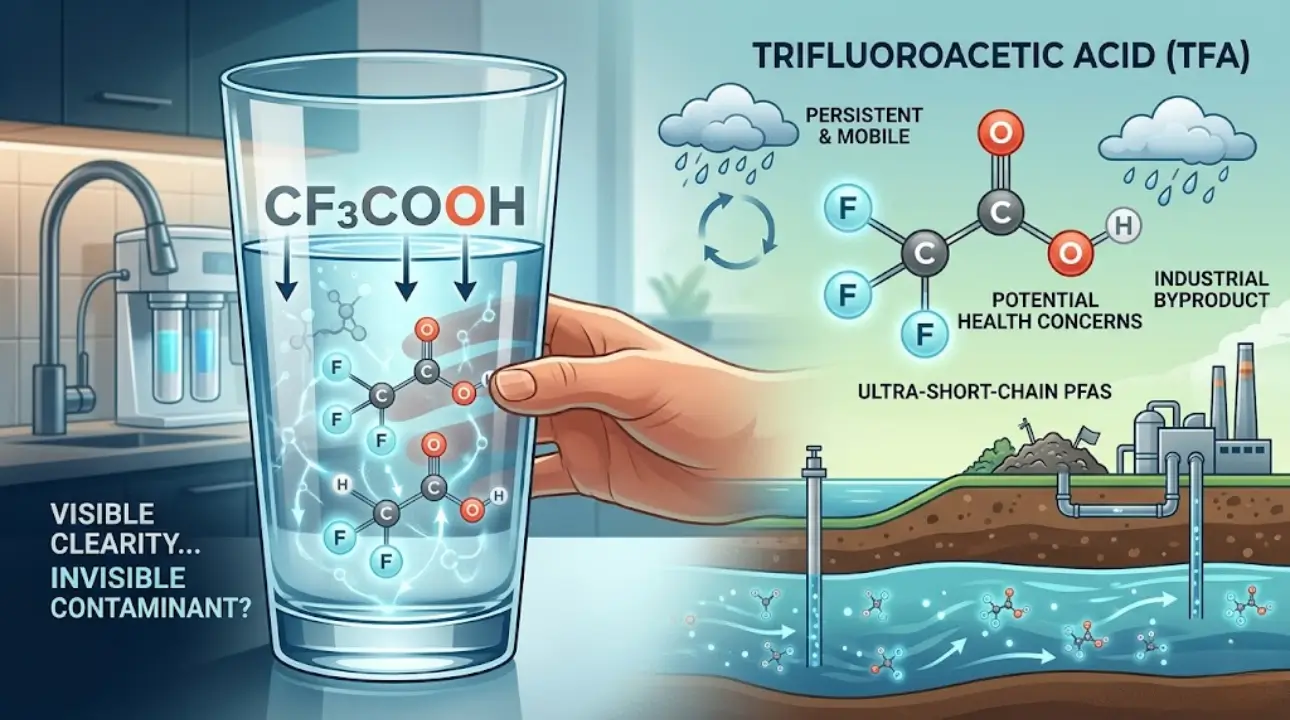
Trifluoroacetic Acid (TFA) is a man-made chemical that belongs to a larger group known as PFAS, often referred to as “forever chemicals.”
What makes TFA different from many other contaminants is its extreme persistence. It does not easily break down in the environment, meaning once it enters water systems, it can remain there for a very long time.
TFA is highly soluble in water, which allows it to travel easily through rivers, groundwater, and even drinking water supplies.
Where Does TFA Come From?
TFA is not usually added directly to water. Instead, it forms as a breakdown product of other chemicals. Common sources include:
- Industrial processes
- Refrigerants and cooling gases
- Pesticides and agricultural chemicals
- Pharmaceutical production
- Atmospheric chemical reactions
Because of this, TFA can spread widely—even reaching areas far from its original source.
Why Is TFA Becoming a Concern?
For many years, TFA received little public attention. However, recent studies have started to highlight its growing presence in the water cycle.
The concern is not just about detection—but about accumulation.
Key reasons for concern:
- Persistence: TFA does not degrade easily
- Mobility: It moves quickly through water systems
- Widespread presence: Found in rainwater, rivers, and groundwater
- Limited removal methods: Traditional systems may not effectively remove it
Scientists are still studying its long-term effects on human health and ecosystems. While research is ongoing, the increasing detection of TFA has raised important questions about water safety in the future.
TFA and Drinking Water
Unlike larger contaminants, TFA is very small and highly soluble, which makes it harder to remove using standard filtration methods.
In many homes, water treatment focuses on:
- Chlorine removal
- Taste improvement
- Limescale reduction
But emerging contaminants like TFA require a more advanced and forward-thinking approach.
This does not mean every home is at immediate risk. However, it does highlight the importance of understanding your water beyond what you can see or taste.
Is TFA Part of the PFAS Problem?
Yes—TFA is increasingly discussed within the broader context of PFAS contamination.
PFAS chemicals are known for:
- Long environmental lifespan
- Resistance to heat and chemical breakdown
- Potential links to health concerns (still under research)
TFA is considered one of the smallest and most mobile PFAS-related compounds, making it particularly difficult to manage.
Why Traditional Water Systems May Not Be Enough
Many conventional water treatment systems were designed decades ago. Their main goals were:
- Remove visible particles
- Improve taste and odor
- Reduce hardness
While these systems can still be useful, they may not address modern contaminants like TFA, PFAS, and microplastics.
In addition, some traditional systems:
- Use high levels of salt
- Waste water during regeneration
- Focus on a single problem instead of overall water quality
This is why many homeowners are now looking toward sustainable and advanced water solutions.
A More Sustainable Approach to Water Treatment
Modern water treatment is evolving. Instead of focusing on one issue, newer systems aim to:
- Improve overall water quality
- Reduce environmental impact
- Minimize waste and chemical use
- Address both traditional and emerging contaminants
This is where solutions like EVODROP follow a different path.
The EVODROP Perspective
EVODROP approaches water as a complete system, not just a single problem to fix. Its philosophy connects:
- Sustainable water treatment
- Salt-free limescale protection
- Advanced filtration concepts
- Long-term environmental responsibility
Rather than removing everything from water, the focus is on:
- Reducing unwanted substances
- Preserving beneficial minerals
- Supporting healthier water use at home
What Can Homeowners Do?
If you are concerned about modern water contaminants like TFA, here are practical steps to consider:
1. Test Your Water
A water test gives a clearer picture of what is actually present in your supply.
2. Understand Your Needs
Not every home requires the same solution. Identify whether your main concern is:
- Limescale
- Taste
- Chemical contaminants
- Overall water quality
3. Choose Future-Ready Solutions
Look for systems designed not just for today’s problems, but also for emerging contaminants.
4. Think Long-Term
Consider:
- Environmental impact
- Maintenance requirements
- Water waste
- Durability
Final Thoughts
Trifluoroacetic Acid (TFA) is a reminder that water quality is changing. What once seemed clean and safe may now require a deeper understanding.
While research is still ongoing, one thing is clear:
Modern water challenges need modern solutions.
By combining awareness, testing, and sustainable technology, homeowners can move toward safer, cleaner, and more responsible water use.
FAQs
What is TFA in water?
- TFA (Trifluoroacetic Acid) is a persistent chemical often linked to PFAS, known for its ability to remain in water for long periods.
Is TFA harmful to humans?
- Research is still ongoing. Scientists are studying its long-term health effects, but its persistence has raised concerns.
Can water filters remove TFA?
- Not all filters are designed to remove TFA. Advanced and specialized systems may be required.
How does TFA enter drinking water?
- It usually forms as a breakdown product of industrial chemicals, refrigerants, and pesticides, and then spreads through the water cycle.